Tirthak's Library

Sorting the bookshelves

Vintage library

The PrivateLibrary ofTirthak Saha

This is a digital archive of my personal collection of books, films, videos, and essays, curated over the course of two decades.

Scroll to enter
Read ✦
Watch ✦
Think ✦
Learn ✦
Analyze ✦
Read ✦
Watch ✦
Think ✦
Learn ✦
Analyze ✦

The Manifesto

01

Purpose

This is not an algorithm's idea of what you might like. It is a digital record of my personal library and archive. It contains works that shaped how I think, all arranged in one place so they might do the same for you.

02

The Library

Browse for book recommendations and inspiration. Nothing here is neutral; each entry is a work I keep in my home library. For Public Domain works, I’ve included links to free versions. For the rest, there are purchase links (no affiliates/sponsorships).

03

The Personal Curriculum

These are learning pathways through fields of human knowledge I find interesting. I built these over the years to teach myself the basics, one step at a time. They’re personal roadmaps, not comprehensive university courses.

Picks of the Month

Currently on
my table

A small, rotating spotlight on things occupying my attention right now.

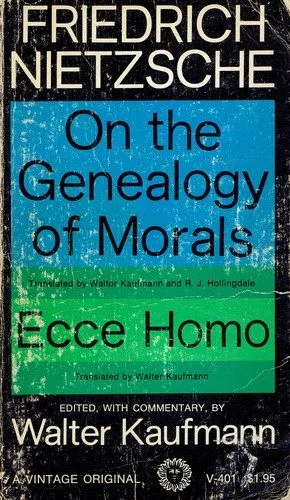
Book

On the Genealogy of Morality

Friedrich Nietzsche · 1887

Nietzsche wrote it in under a month as a follow-up to Beyond Good and Evil, tracing how the values of the strong were inverted by those they dominated. The second essay, on guilt as an outgrowth of debt, is his most sustained piece of straight argument. This edition is the Clark and Swensen translation for Hackett, which renders the title as Morality rather than Morals.

Explore
Book

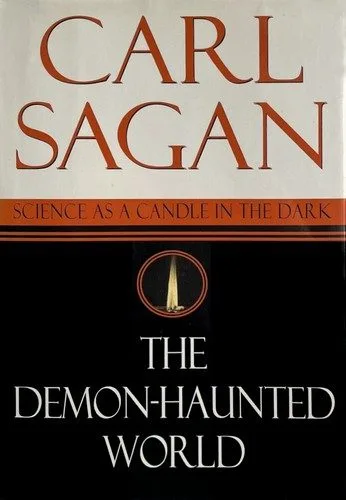
The Demon-Haunted World

Carl Sagan · 1995

Sagan sets out what he calls the baloney detection kit: nine tools for weighing evidence, from independent confirmation and multiple working hypotheses to Occam's razor and falsifiability, followed by a catalogue of twenty logical fallacies to watch for. The book is at its best when it treats science as a way of thinking with an error-correcting machine built into it rather than a body of settled facts.

Explore

Book

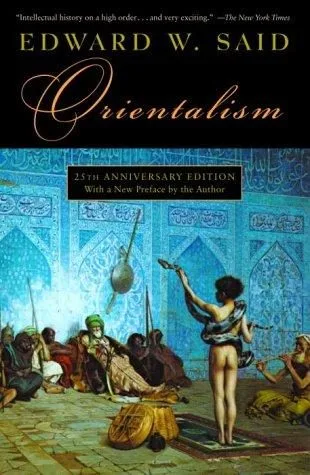
Orientalism

Edward Said · 1978

Said argues that Western scholarship on the East was never neutral: depicting Oriental societies as irrational, primitive and backward supplied the intellectual justification for ruling them. The arrangement also denied those societies the standing to represent themselves, since the authority to describe them sat elsewhere. First published in 1978.

Explore

Book

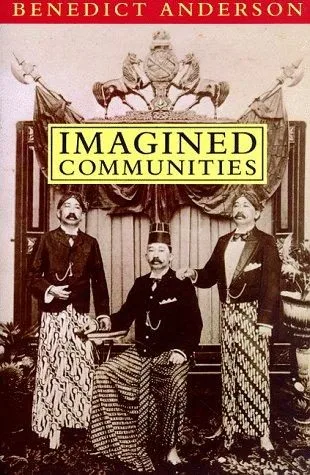
Imagined Communities

Benedict Anderson · 1983

Anderson defines a nation as an imagined political community, imagined as limited and as sovereign, whose members will never meet most of their fellow citizens. His account of how it became thinkable turns on print capitalism: standardised vernaculars, and the daily newspaper read by thousands of people at once as a kind of ritual. First published in 1983.

Explore

Book

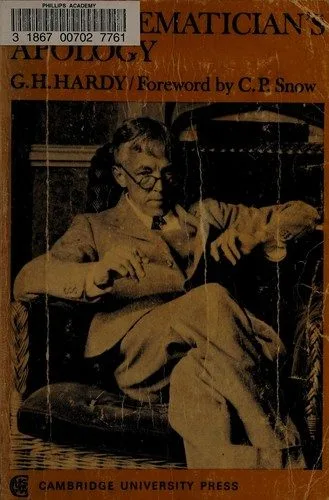
A Mathematician's Apology

G.H. Hardy · 1940

Hardy defends pure mathematics on the grounds of beauty alone, argues that its uselessness is what keeps it clean, and dismisses much applied work as trivial, ugly or dull. He wrote it at sixty-two, after a heart attack, convinced his own creative powers were gone and that mathematics is a young man's game. C. P. Snow, who supplies the foreword, called it a passionate lament for creative powers that used to be and that will never come again.

Explore

Book

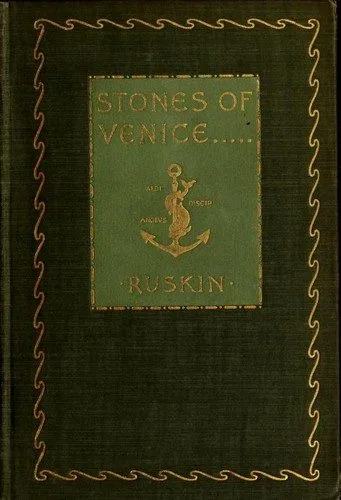
The Stones of Venice

John Ruskin · 1851

Ruskin reads Venice's buildings as a moral record, and in The Nature of Gothic, the chapter at the heart of the second volume, argues that Gothic is great because it let the workman think while he worked. His objection is to the division between the gentleman who thinks and the operative who does not, which he says produces morbid thinkers and miserable workers. The linked copy is J. G. Links's one-volume abridgement; the original ran to three volumes, published by Smith, Elder and Co. in 1851 and 1853.

Explore

Book

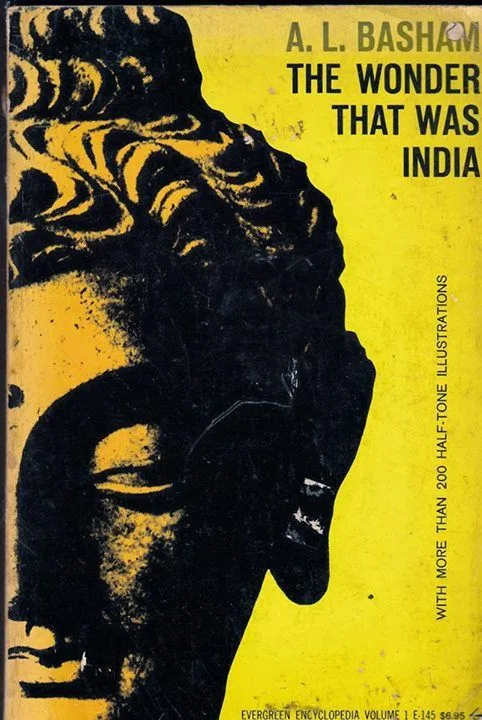
The Wonder That Was India

A.L. Basham · 1954

Basham's survey of Indian civilisation from its beginnings was published in Britain in 1954 and has been translated into many languages since. The link is Picador's fiftieth anniversary edition, which carries a foreword by Thomas R. Trautmann.

Explore

Book

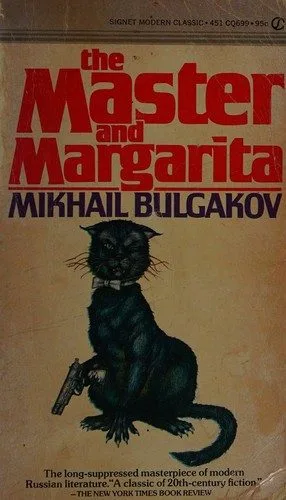
The Master and Margarita

Mikhail Bulgakov · 1967

The devil arrives in Stalin's Moscow with a retinue that includes a giant talking cat, while a parallel narrative follows Pontius Pilate's interrogation of Yeshua Ha-Notsri. Bulgakov wrote it between 1928 and 1940 and never saw it published; a censored version ran in the magazine Moskva across 1966 and 1967 with about twelve per cent of the text removed, and the first complete book edition appeared in Paris in 1967. The link is the Penguin Classics Deluxe fiftieth anniversary edition in the Pevear and Volokhonsky translation.

Explore

Book

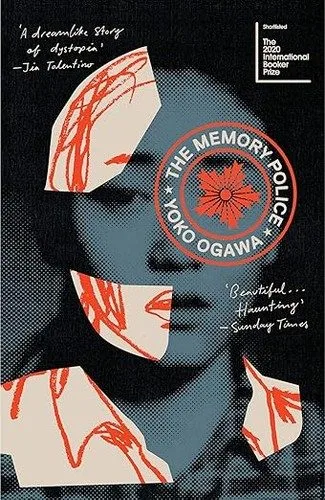
The Memory Police

Yoko Ogawa · 1994

On an unnamed island things stop existing in people's minds, hats and perfume and birds and ribbons, and the Memory Police see to the removal of whatever has been forgotten. The narrator, a novelist, hides her editor in a concealed room in her house because he is one of the few who still remembers. The Japanese original is from 1994 and Stephen Snyder's translation only appeared in 2019, which is the year most coverage gives; the link is the Vintage paperback.

Explore

Book

Flesh

David Szalay · 2025

Istvan drifts from a Hungarian housing estate to serious London money and back down again, rarely saying much more than 'okay'. Szalay strips the telling to the bone so the silences carry the weight, and it won the 2025 Booker doing it.

Explore

Book

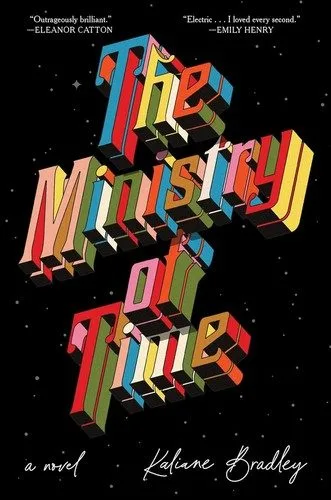
The Ministry of Time

Kaliane Bradley · 2024

A British government ministry pulls people out of the past before they would have died and calls them expats. The narrator, the daughter of a British father and a Cambodian refugee mother, is assigned as bridge to Graham Gore, an officer from a nineteenth-century Arctic expedition, and their arguments about modern Britain turn into espionage and romance. It won the Hugo Award in 2025. The link is the Hodder & Stoughton hardback, the first UK edition.

Explore

Book

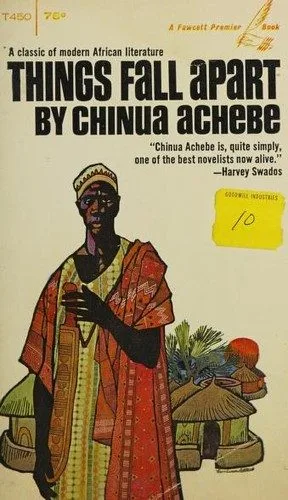
Things Fall Apart

Chinua Achebe · 1958

Okonkwo, a wrestler and yam farmer of standing in an Igbo village, has built his whole life out of terror of being thought weak like his father, and it is that rigidity rather than the British that finally breaks him. Achebe gives the village its own full religious and social life first, so that what the missionaries take apart is something the reader has already come to know from the inside.

Explore

Essay

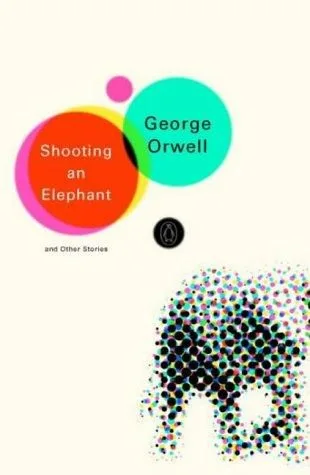
Shooting an Elephant

George Orwell · 1936

Orwell published this in the magazine New Writing in late 1936, drawing on his years as a policeman in Burma. Its point is that the officer with the rifle is the one least free in the crowd, since the ruler has to act out what the ruled expect of him. The link is the Penguin collection Shooting an Elephant and Other Essays, which carries the title piece with My Country Right or Left, How the Poor Die and Such, Such Were the Joys among others.

Explore

Book

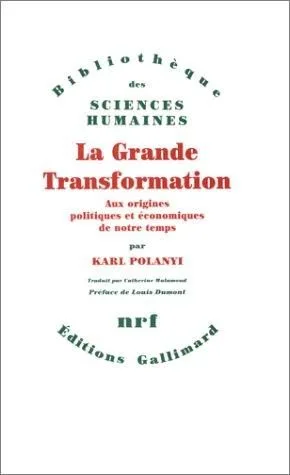
The Great Transformation

Karl Polanyi · 1944

Polanyi argues that treating land, labour and money as ordinary commodities tears up the societies underneath them, and that the resulting backlash produced the upheavals of the twentieth century. Written in 1944, and the reason the phrase double movement keeps resurfacing.

Explore

15 picks

My Book

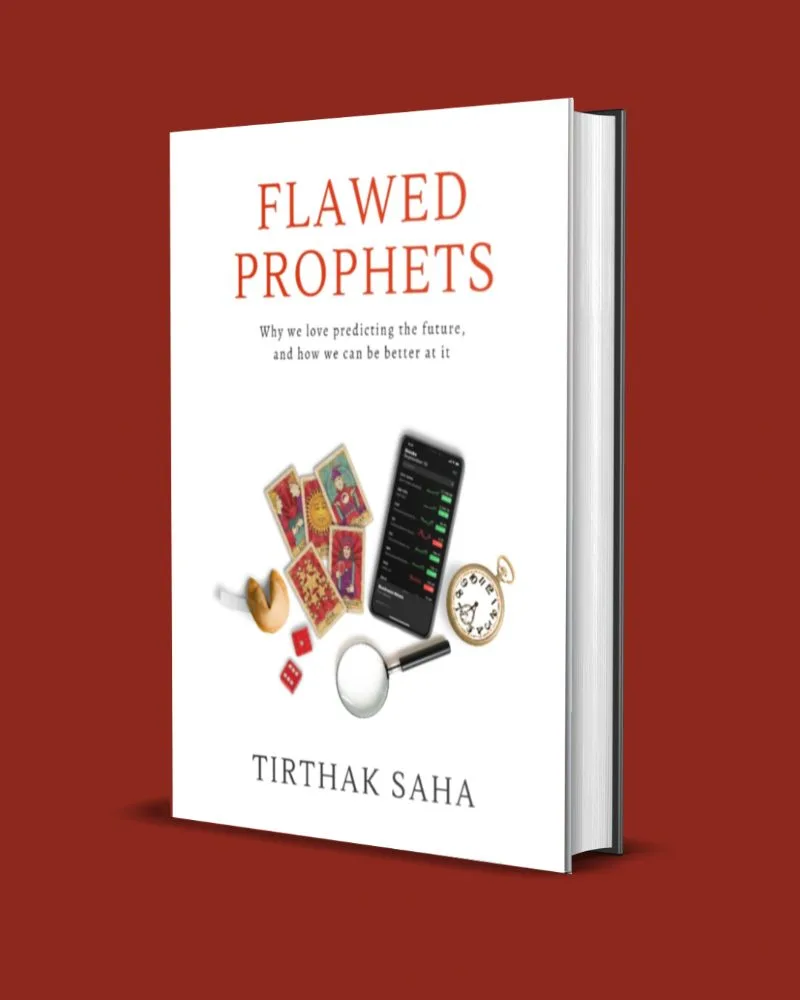
Flawed
Prophets

Humans are obsessed with predicting the future, yet we’re remarkably bad at it. Why are we the only animal that tries to predict the future? Why do our best experts get them so spectacularly wrong? And what can we learn from the rare visionaries (such as Kepler, Rachel Carson, or Einstein) who saw further than everyone else? We are all prophets, yes, but we are also flawed. Can we become better? Tracing a story across a canvas as large as humanity itself, this book explores why humans predict, why we fail, and how we can get better at it.

Flawed Prophets
Reader reviews · Goodreads

“There are so many anecdotes with which Saha examines : the human predilection for making predictions, the conditions which ensure greater accuracy in our predictions and the human potential in precarious times. The anecdotal references are wide ranging from scientific breakthroughs to AI, to industrial case studies to art. You name it! All taken from different time periods. The subject is contemporary and he has such fresh insights to offer all the while keeping the language simple and the book crisp yet profound.”

— Prerna Munshi