
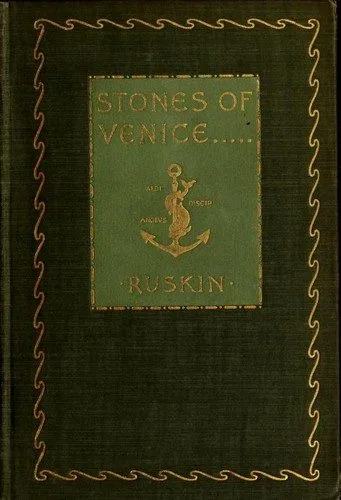
The Stones of Venice
John Ruskin
Ruskin reads Venice's buildings as a moral record, and in The Nature of Gothic, the chapter at the heart of the second volume, argues that Gothic is great because it let the workman think while he worked. His objection is to the division between the gentleman who thinks and the operative who does not, which he says produces morbid thinkers and miserable workers. The linked copy is J. G. Links's one-volume abridgement; the original ran to three volumes, published by Smith, Elder and Co. in 1851 and 1853.
Why you should read this
Ruskin's study of Venetian architecture as a moral and social record, most remembered now for the 'Nature of Gothic' chapter and its defense of imperfect, handmade craftsmanship over industrial regularity. Dense Victorian prose suited to readers with a standing interest in architectural history.
- Field
- Art History
- Form
- Non-fiction
- Published
- 1851
- Themes
- ArchitectureArt History


